Kilowatt-Level Thulium Fiber Laser | Single Frequency Fiber Laser
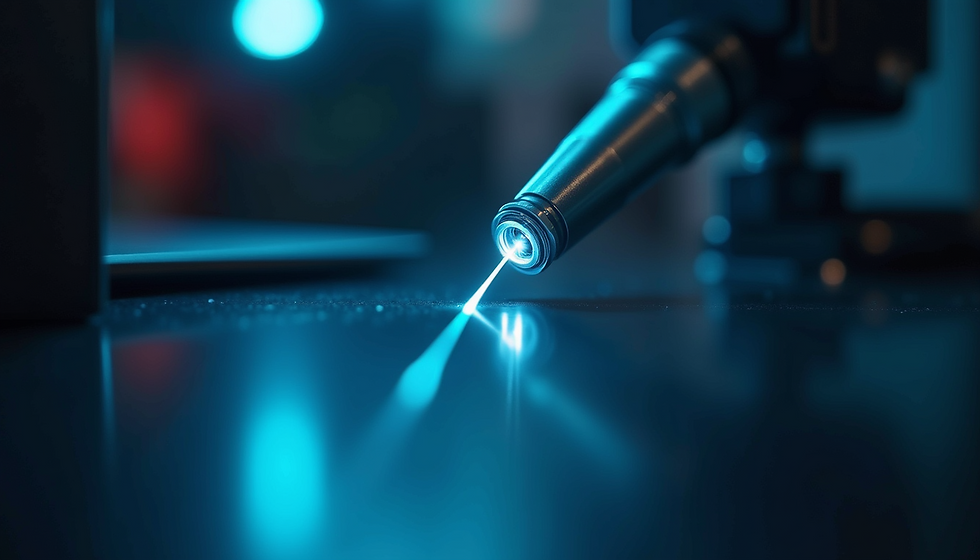
Learn about kilowatt thulium fiber laser systems, performance and uses. Contact Single Frequency Fiber Laser on WhatsApp +86-13958180450 for details, Hangzhou, China
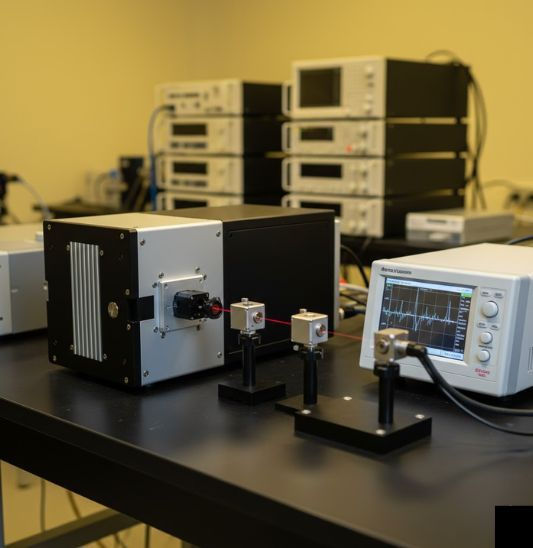
Kilowatt-Level thulium fiber laser: Power, Performance & Use Cases
High-power laser technology plays a critical role across scientific research, industrial processing, medical applications, and defense systems. Among the most advanced solutions available today, the Kilowatt-Level thulium fiber laser stands out for its stability, wavelength precision, and practical adaptability across demanding environments. This article explains how this technology works, what makes it valuable, and where it is commonly used.
Located in Zhenhua, Hangzhou City, China, Single Frequency Fiber Laser specializes in advanced laser systems designed for performance consistency and application flexibility.
Understanding Thulium-Based Laser Technology
Thulium lasers operate typically around the 2 μm wavelength range. This wavelength is considered eye-safe compared to many other industrial laser wavelengths, making it suitable for environments where safety is essential. A fiber laser using thulium-doped fiber combines the benefits of compact design with strong power efficiency.
Unlike traditional solid-state lasers, fiber-based systems integrate the gain medium within an optical fiber. This structure allows better thermal management, reduced alignment issues, and dependable long-term operation.
Why Kilowatt-Level Output Matters
Achieving kilowatt-level power is not just a technical milestone; it directly impacts application capability. Higher output enables:
-
Faster material processing rates
-
Deeper cutting and welding penetration
-
Stable performance for long-duration operations
-
Greater transmission efficiency in free-space communication
-
Reliable results in research environments
A Kilowatt-Level thulium fiber laser offers consistent beam quality while maintaining strong optical efficiency, making it suitable for precision-focused tasks.
Core Performance Characteristics
The performance of high-power laser systems depends on several measurable characteristics. Modern designs focus on achieving balance across all parameters rather than pushing a single metric.
1. Beam Quality
A high-quality beam ensures accurate energy delivery. This is essential for cutting, welding, sensing, and medical uses where precision is non-negotiable.
2. Power Stability
Fluctuating output can affect system reliability. Stable output power supports consistent operational results across industrial and laboratory environments.
3. Thermal Management
Efficient heat dissipation supports long operating hours. Fiber-based designs distribute heat more effectively than bulk laser systems.
4. Compact System Architecture
Compared to older laser platforms, a modern fiber laser is lighter, smaller, and easier to integrate into existing systems.
Single Frequency Fiber Laser focuses on system engineering that balances all of these performance factors for reliable real-world usage.
Common Use Cases Across Industries
The versatility of thulium fiber technology allows it to serve multiple sectors where precision and power are both essential.
Industrial Material Processing
High-power laser systems support:
-
Metal cutting and fine welding
-
Surface treatment processes
-
Additive manufacturing applications
-
Composite material processing
The wavelength characteristics of a Kilowatt-Level thulium fiber laser also support strong absorption in certain materials, improving processing efficiency.
Medical and Surgical Systems
The 2 μm wavelength is well suited for interaction with biological tissues and water absorption, making it useful in:
-
Soft tissue procedures
-
Surgical instrument systems
-
Medical research equipment
-
Clinical laboratory applications
Precision and controlled penetration depth are key advantages in this field.
Scientific Research and Laboratories
Universities and research institutions rely on stable, narrow-linewidth laser systems for:
-
Spectroscopy experiments
-
Optical sensing
-
Atmospheric studies
-
Nonlinear optics research
High coherence and stability are especially valuable in experimental setups.
Defense and Sensing Technologies
Advanced laser platforms are also applied in:
-
Lidar systems
-
Target illumination
-
Free-space optical communication
-
Infrared countermeasure research
Many integrators, including Techwin, incorporate thulium-based systems into high-end sensing platforms.
Technical Advantages Over Traditional Laser Types
Compared with other laser formats, thulium fiber systems provide practical operational advantages:
-
Higher electrical-to-optical efficiency
-
Reduced maintenance requirements
-
Longer operational lifetime
-
Resistance to vibration and environmental variation
-
Simplified cooling requirements
These benefits allow engineers and system designers to depend on a fiber laser platform for mission-critical deployments.
Manufacturing and Engineering Standards
High-power laser systems demand strict quality control across components, including pump diodes, optical fibers, control electronics, and cooling modules. At Single Frequency Fiber Laser, engineering focuses on precision manufacturing and system testing to meet application-specific requirements.
Operations based in Zhenhua, Hangzhou City, China support access to advanced photonics manufacturing ecosystems, which contributes to consistent product quality and technical refinement.
Integration and Customization Potential
One of the major strengths of thulium-based systems is integration flexibility. Engineers can configure power levels, beam delivery options, and control systems based on project requirements. This adaptability supports usage across:
-
OEM system development
-
Research instrument design
-
Industrial automation
-
Government-funded technology programs
A well-designed Kilowatt-Level thulium fiber laser can serve as a core component within highly customized photonic platforms.
Future Outlook for Thulium Fiber Laser Technology
The demand for mid-infrared laser sources continues to expand. With ongoing advancements in fiber design, pump efficiency, and thermal handling, the performance limits of thulium-based systems continue to advance steadily. Researchers expect further improvements in:
-
Output power scalability
-
System compactness
-
Efficiency optimization
-
Long-term operational stability
These developments indicate continued adoption of thulium fiber systems across both established and emerging application areas.
As industries require more precise, stable, and efficient photonic solutions, the fiber laser platform remains a reliable technological foundation. With its wavelength advantages, power capability, and adaptable architecture, the Kilowatt-Level thulium fiber laser represents a practical choice for organizations seeking dependable high-power laser performance.
CONTACT US
As industries require more precise, stable, and efficient photonic solutions, the fiber laser platform remains a reliable technological foundation. With its wavelength advantages, power capability, and adaptable architecture, the Kilowatt-Level thulium fiber laser represents a practical choice for organizations seeking dependable high-power laser performance.